
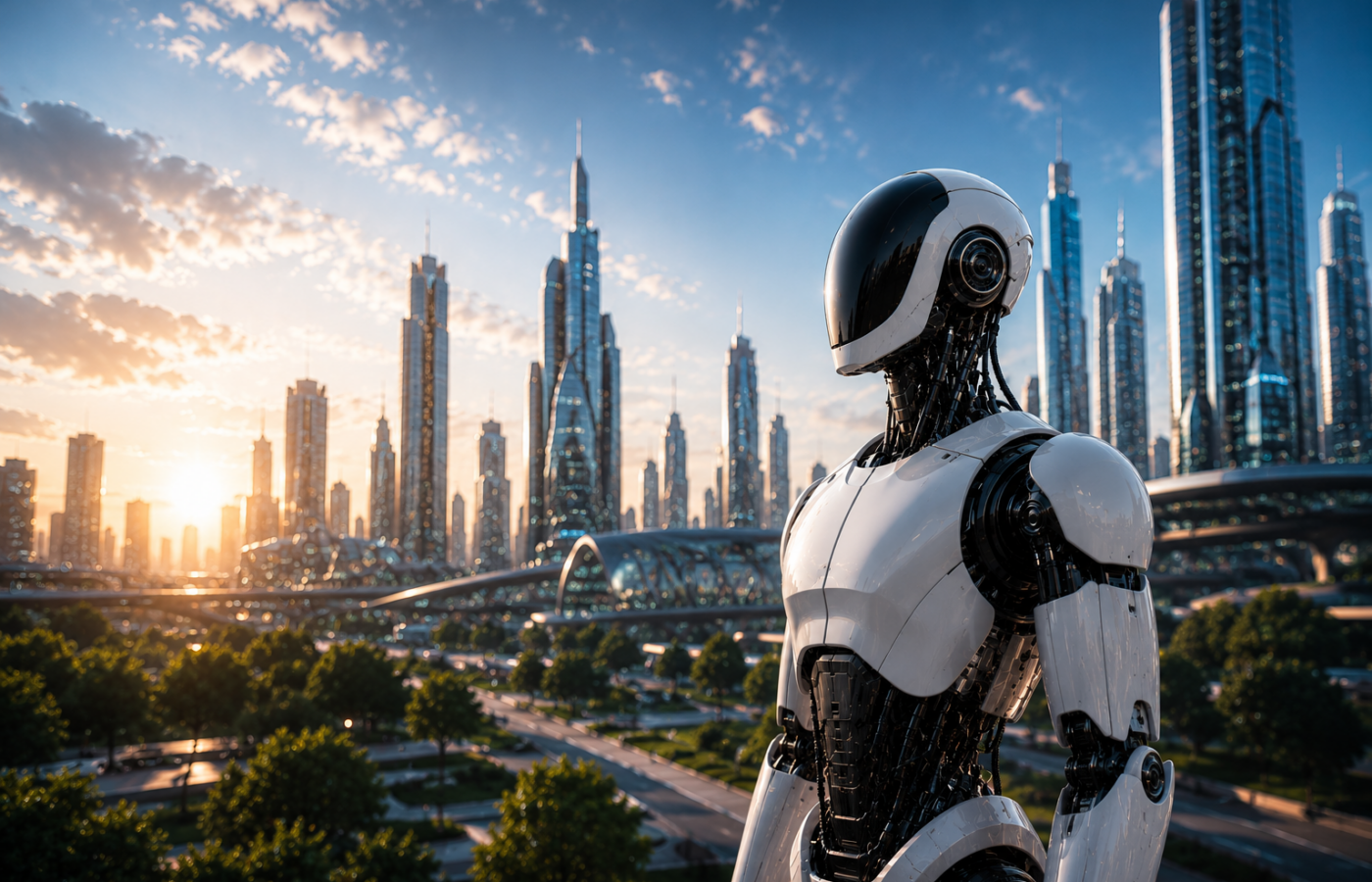
The Rise of Humanoid Robots: Are We Ready for a Robot-Powered Future?

Humanoid robots are no longer just science fiction. What once seemed like a futuristic dream is rapidly becoming reality. From assisting factory workers to helping customers in stores and even performing household tasks, humanoid robots are evolving at an incredible pace.
Companies worldwide are investing billions of dollars into robotics and artificial intelligence, aiming to create machines that can work alongside humans in everyday environments.
But are we truly ready for a robot-powered future?
Let’s explore.
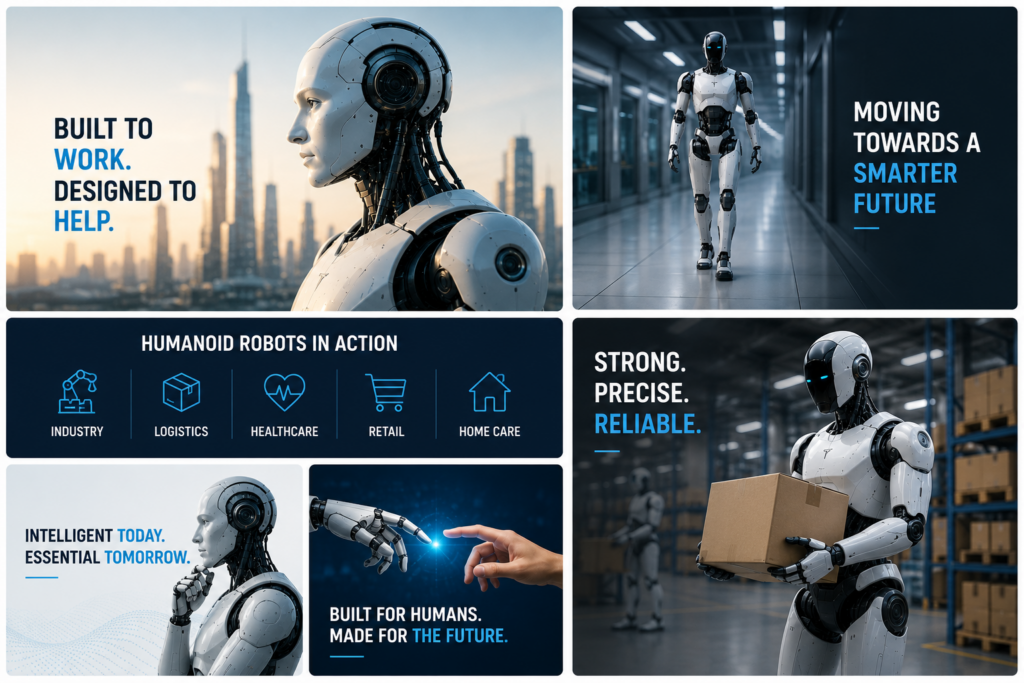
What Are Humanoid Robots?
Humanoid robots are robots designed to resemble the human body. They typically have:
- A head
- Two arms
- Two legs
- Cameras and sensors for vision
- Artificial Intelligence for decision-making
Unlike traditional industrial robots that perform repetitive tasks in fixed locations, humanoid robots are built to move and interact within environments designed for humans.
Their goal is simple: perform human-like tasks efficiently and safely.
Why Are Humanoid Robots Becoming Popular?
Several technological advancements are driving the rise of humanoid robots:
Artificial Intelligence
Modern AI enables robots to understand commands, recognize objects, learn from experiences, and make decisions in real time.
Better Sensors
Advanced cameras, LiDAR systems, and depth sensors allow robots to navigate complex environments.
Improved Batteries
Longer-lasting batteries make robots more practical for real-world applications.
Powerful Computing
Modern processors provide the computational power needed for advanced robotic intelligence.
Leading Humanoid Robots in 2026
Tesla Optimus
Developed by Tesla, Optimus is designed to perform repetitive and potentially dangerous tasks in factories and workplaces.
Potential uses include:
- Manufacturing
- Logistics
- Warehouse operations
- Household assistance
Figure 02
Figure AI has developed one of the most advanced humanoid robots currently available.
Capabilities include:
- Object handling
- Workplace assistance
- Human interaction
- Autonomous movement
Atlas by Boston Dynamics
Atlas is famous for its impressive agility.
The robot can:
- Run
- Jump
- Climb
- Perform acrobatic movements
Atlas showcases what future mobility could look like in robotics.
Unitree G1
Unitree’s humanoid robot has attracted attention for offering advanced capabilities at a relatively affordable cost compared to competitors.
How Humanoid Robots Are Being Used Today
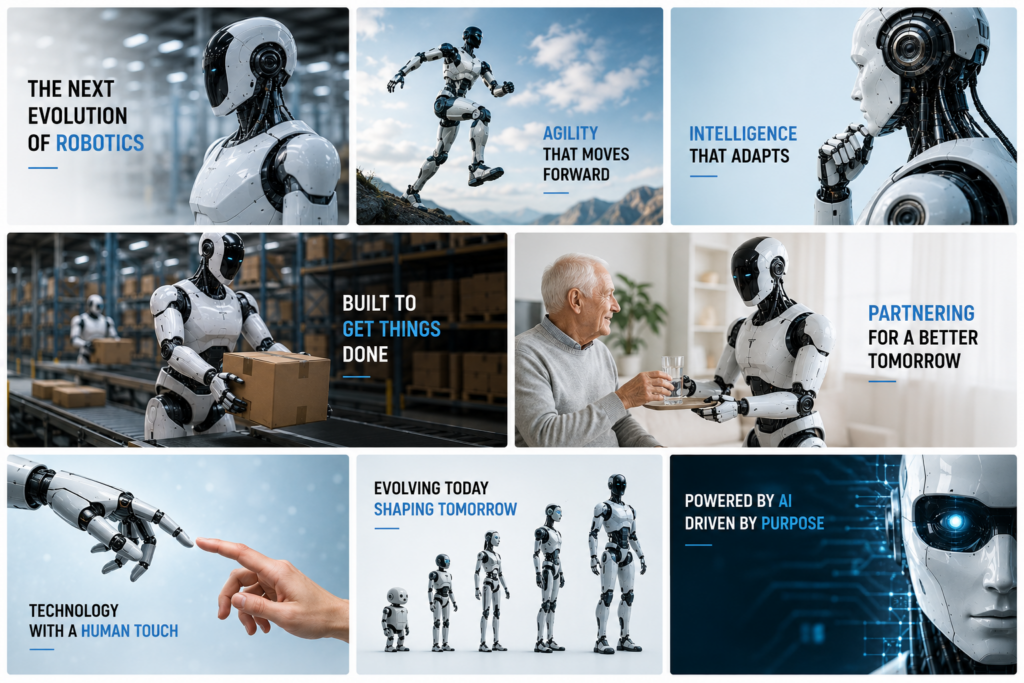
Although widespread adoption is still in its early stages, humanoid robots are already finding practical applications.
Manufacturing
Robots can perform repetitive tasks with high precision and consistency.
Warehousing
They help move products, organize inventory, and improve operational efficiency.
Healthcare
Future robots may assist healthcare professionals by supporting elderly patients and individuals with disabilities.
Hospitality
Hotels, airports, and retail stores are exploring robot assistants for customer service and information support.
Home Assistance
Many companies are developing robots capable of performing everyday household tasks.
Benefits of Humanoid Robots
Increased Productivity
Robots can work continuously without fatigue.
Improved Workplace Safety
Dangerous tasks can be assigned to robots instead of humans.
Labor Shortage Solutions
Many industries face workforce shortages that robots may help address.
Better Efficiency
Robots can perform repetitive tasks consistently with fewer errors.
24/7 Availability
Unlike humans, robots do not require breaks, vacations, or sleep.
Challenges and Concerns
While humanoid robots offer many benefits, concerns remain.
Job Displacement
Many people worry that automation could replace certain jobs.
High Costs
Advanced humanoid robots remain expensive to develop and deploy.
Privacy Concerns
AI-powered robots may collect large amounts of data.
Safety Risks
Robots operating around humans must meet strict safety standards.
Ethical Questions
Society must decide how much autonomy robots should have.
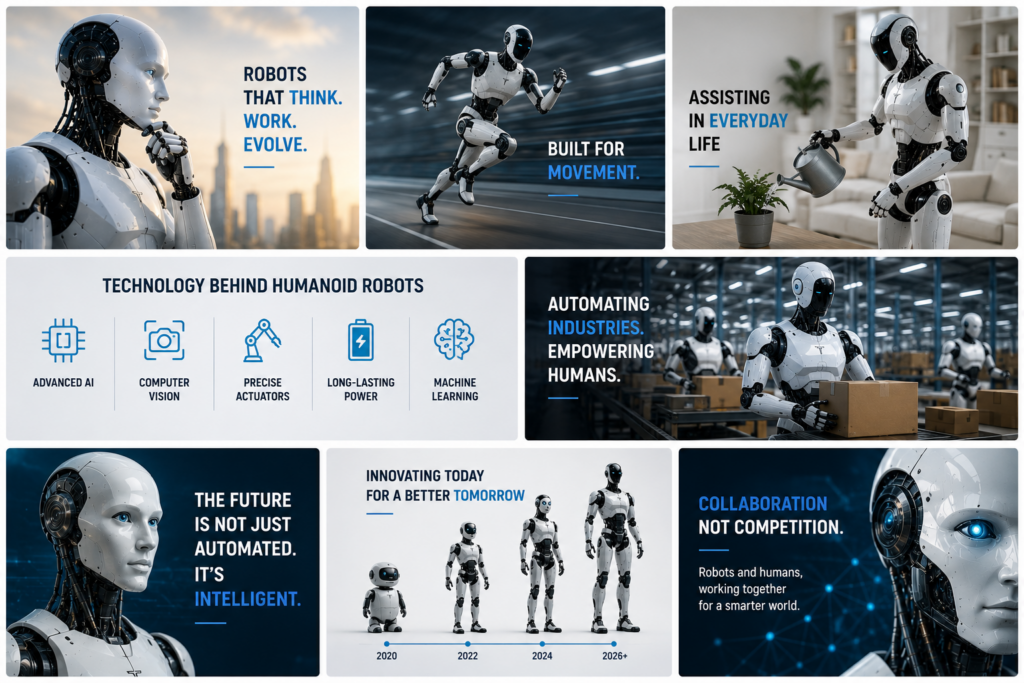
Will Robots Replace Human Jobs?
This is one of the most common concerns surrounding robotics.
The reality is more complex.
Historically, new technologies have eliminated some jobs while creating entirely new industries and opportunities.
Humanoid robots are likely to:
- Automate repetitive work
- Assist human workers
- Improve efficiency
- Create new careers in robotics, AI, engineering, maintenance, and software development
Rather than replacing all jobs, robots will most likely transform how people work.
What Could the Future Look Like?
By 2030, humanoid robots could become common in:
🏭 Factories
🏪 Retail Stores
🏥 Hospitals
🏨 Hotels
🏠 Homes
🚚 Logistics Centers
As production scales and costs decrease, humanoid robots may become as common as smartphones and computers are today.
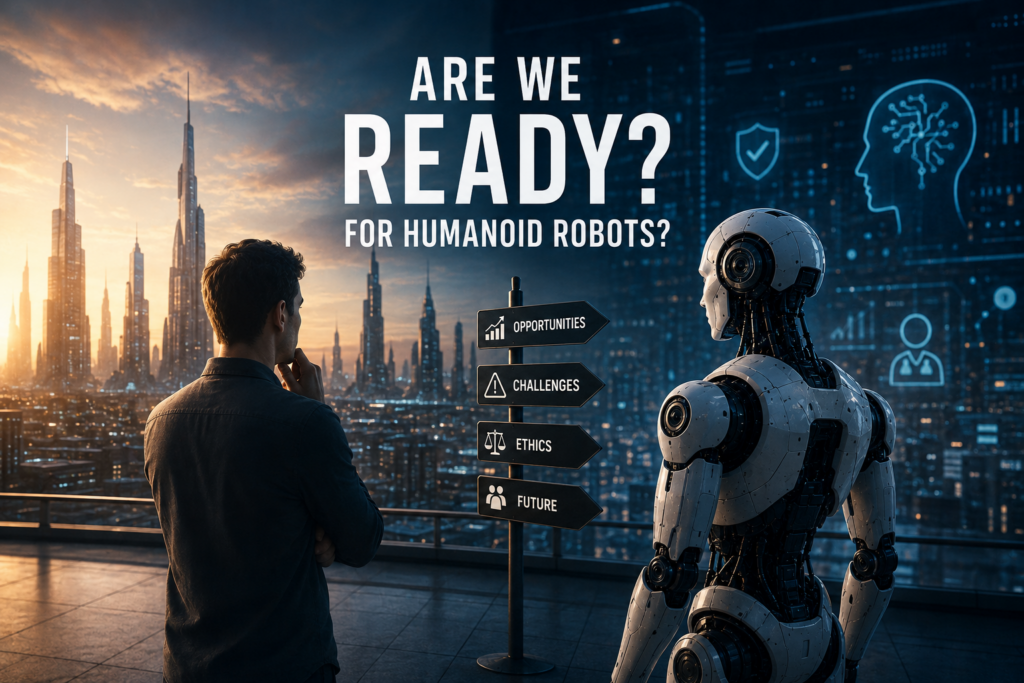
Are We Ready?
Technologically, we are closer than ever.
However, governments, businesses, and society still need to address important questions regarding regulation, ethics, safety, privacy, and workforce adaptation.
Humanoid robots have the potential to improve productivity, support industries, and help solve labor shortages. At the same time, responsible development will be essential to ensure these technologies benefit humanity.
Final Thoughts
The rise of humanoid robots marks one of the most exciting technological shifts of our generation. Advances in AI, robotics, and computing are bringing machines closer to human capabilities than ever before.
Whether they become household assistants, factory workers, healthcare aides, or companions, humanoid robots are poised to play a significant role in our future.
The question is no longer whether humanoid robots will become part of our lives.
The real question is:
Are we ready for a robot-powered future?
For more technology updates, gadget reviews, AI news, smartphone comparisons, electric vehicles, and future tech trends, visit Technobloga and explore our latest articles. Stay informed. Stay ahead.